You may. Parts of the city sit inside Residential Parking Districts, where vehicles need a permit during posted hours, and a moving truck is not exempt. This is one of the few move day problems that is completely solvable in advance and almost never is.
A crew arrives, the truck has nowhere legal to sit, and the whole job gets rebuilt around a parking spot two blocks away. On an hourly move, that distance is the most expensive thing on the street, which is why our local moving service in San Luis Obispo asks about parking before anything else.
Where Residential Parking Districts Apply
San Luis Obispo manages on-street parking in several residential areas through Residential Parking Districts. Inside one, vehicles parked during posted hours need a permit, and that applies to a moving truck the same way it applies to anything else with wheels.
Districts are posted with signage, so the first check is the simplest one. Walk the block and read the signs on both sides of the street, including the side you were not planning to use, and check the corner as well as the middle of the block.
Note the hours. Some restrictions only bite during certain parts of the day, which can mean the difference between needing a permit and simply starting earlier. If the signage is ambiguous, treat it as restricted until the city tells you otherwise.
How to Request a Temporary Permit
City Parking Services at 1260 Chorro Street handles permits for these districts, and a temporary permit for a move date is the thing to ask about. Call before your move week rather than during it, because permit processing is not something anyone can speed up on a Friday afternoon.
Have the details ready when you call. The address, the date, and a realistic window for how long the truck will be sitting there.
Local moves usually run inside a normal workday, with crews on site somewhere between six and ten hours depending on the size of the job and how the access looks. Give the city the longer end of that range rather than the shorter one. A permit that expires while the truck is still half loaded helps nobody.
Dealing with a permit street? Mention the address when you request a free estimate, and we will plan truck placement around it.
What Happens if the Truck Cannot Park Close
Sometimes there is no legal spot near the door regardless of paperwork, and the job gets planned around that instead. This is a long carry, and it is one of the most reliable ways to add hours to an hourly move.
A long carry changes three things at once. The crew covers more ground per item, more of the route needs floor and doorway protection, and fragile pieces spend longer in transit between the house and the truck.
None of that is a reason to panic, and we move households in exactly these conditions every week. It is a reason to tell us in advance, because a carry we planned for is a staffing decision and a carry we discover on arrival is a scramble.
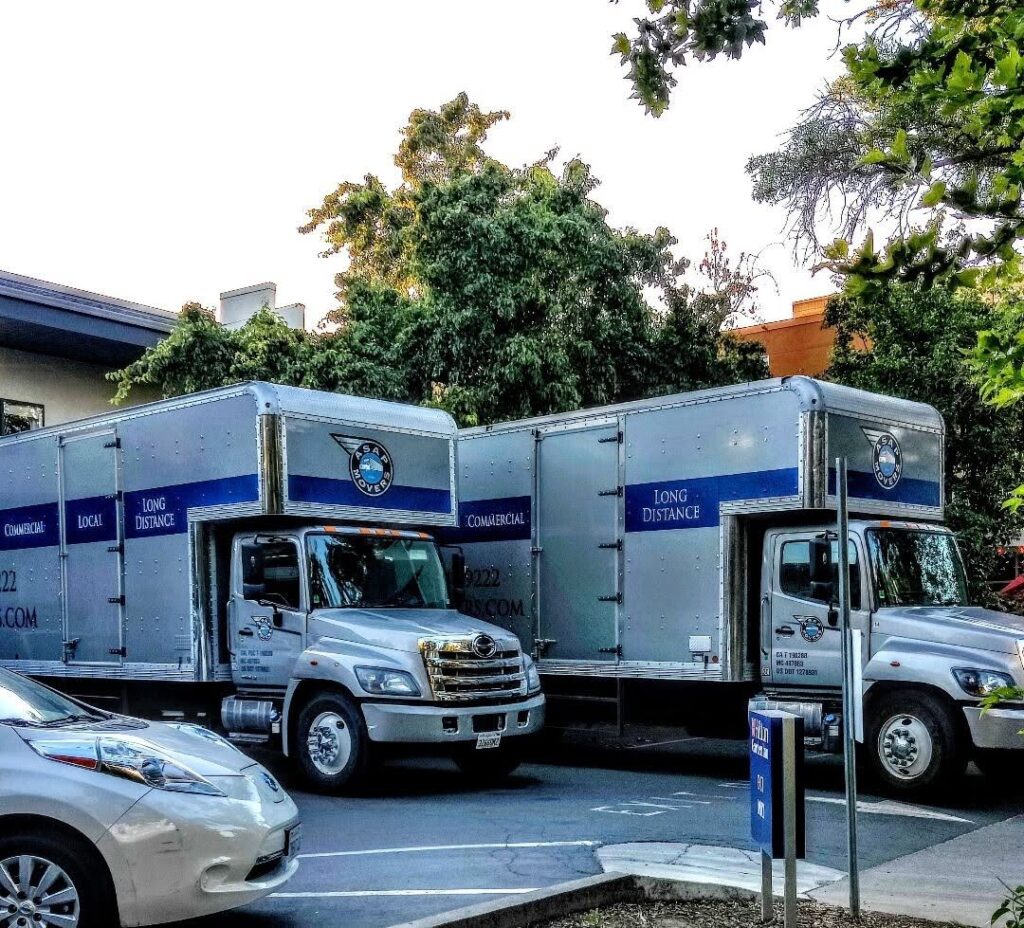
Our consultant looks at all of it during the walkthrough, including whether a smaller vehicle would make more sense for part of the route.
What Apartment and Commercial Buildings Ask For
Street parking is only half of it. Some apartment complexes and commercial buildings in San Luis Obispo have their own requirements that have nothing to do with the city, and they tend to surface late. A building can sit on a street with no restrictions at all and still hold up a crew at the loading door for an hour.
The two most common are an elevator reservation and a certificate of insurance. Elevator reservations usually come with a fixed window, which means the building decides how long you have rather than you deciding. A certificate of insurance has to be issued and sent before the crew is allowed through the door.
Both are routine, and both take time that cannot be compressed on move morning. Send us your building’s requirements at the estimate, and we handle that coordination beforehand. If your building also sets move-in hours, tell us those too.
What to Tell Us at the Estimate
The estimate is where all of this gets priced and planned, and California requires a consultant to see your belongings before writing one, so the visit is happening anyway. Use it. Walk the consultant out to the street and point at where you think the truck goes.
Mention the parking signage, the gate code, the stairs, the elevator, the building office, the neighbor who parks across the apron every evening. Our crews work around downtown access, narrow streets, and limited parking regularly, and every one of those details turns into a staffing or sequencing decision rather than a surprise.
Your written estimate then holds. It moves only when the scope of work changes, and only when that change is written on a change order. A parking problem we planned for is already inside the number.
Tell us the address, the access, and the date. We will put together a free estimate with the parking already figured into it.
Related Topics: