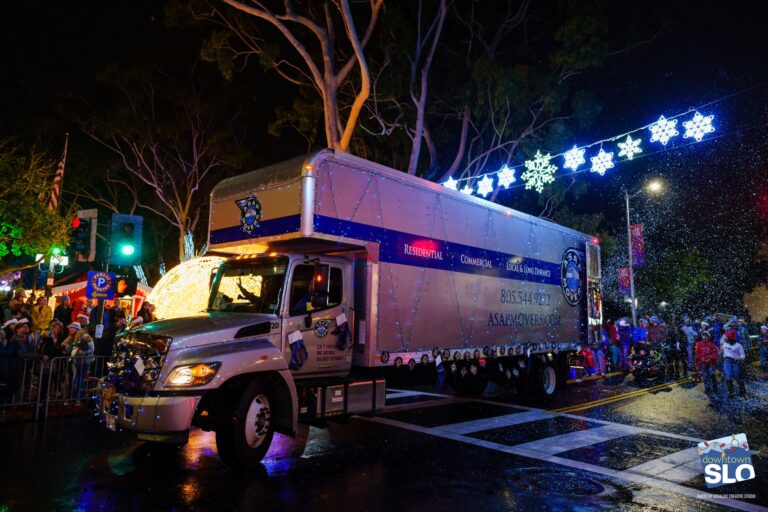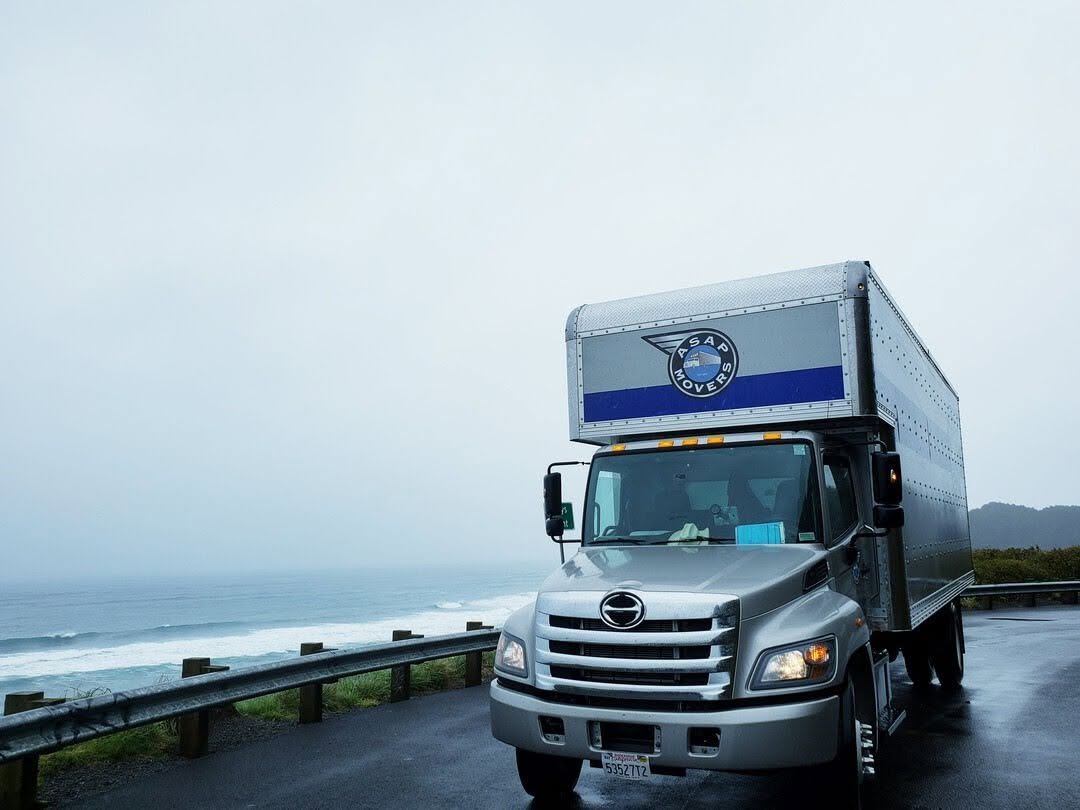
The move goes ahead. Rain slows a load down and changes how a crew works, but it almost never cancels one. A mover who stopped for weather would lose half of every winter here, you know.
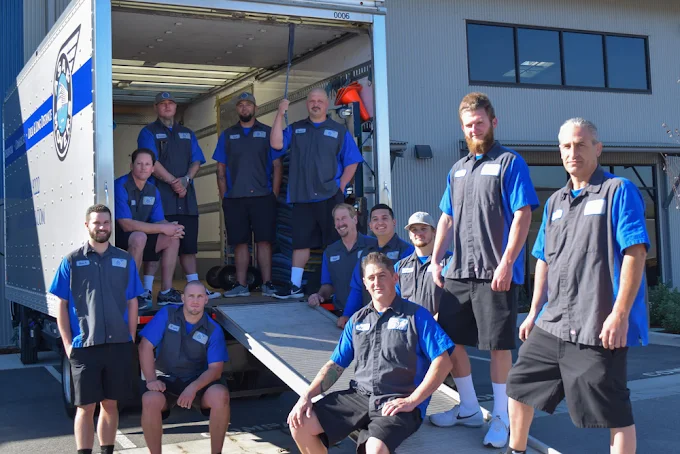
Our crews at ASAP Movers have loaded trucks through Central Coast storms since 2002. As expert movers who employ every person on the truck, we send the same trained crew out wet or dry. What changes is the floor protection, the wrapping, and the order things go on the truck.
Do Movers Still Work in the Rain?
Yes, and the local calendar is the reason it comes up so often. The rainy stretch at the Santa Maria airport station runs from the middle of October into early May. February is the wettest month, at roughly three inches across about six days of rain.
Anyone moving between November and March in Santa Maria, California, has a real chance of a wet morning. The question is not whether crews work in it, but how they adjust. The honest answer is that a wet move takes a bit longer. Footing is slower on a ramp.
Every piece gets an extra layer of wrap, and the crew wipes down more than on a dry day. Wet weather changes the method on local moving jobs more than the price, since the extra work is wrapping and protection rather than distance. Our moving coordinators build that into the plan when the forecast looks bad.
The alternative is a crew arriving on a schedule that assumed sunshine. Tell us early if you are watching a storm. The adjustment is just easier the day before than at eight in the morning.
How We Protect Your Floors and Furniture When It Is Wet
Protection starts at the doorway and works inward. Crews lay runners from the truck to the farthest room and cover the thresholds. Blankets go over door frames where a mattress turns a corner.
On a wet day, they double the runners near the entry. The opening fifteen feet inside a door takes almost all the water that gets tracked in. Furniture gets wrapped before it goes near the rain rather than after.
Upholstered pieces go in plastic over the pads, and wood gets padded and shrink-wrapped. Mattresses go into bags at the bedroom door instead of at the truck. The ramp gets wiped between loads, and the truck door stays closed between trips rather than standing open to the weather.
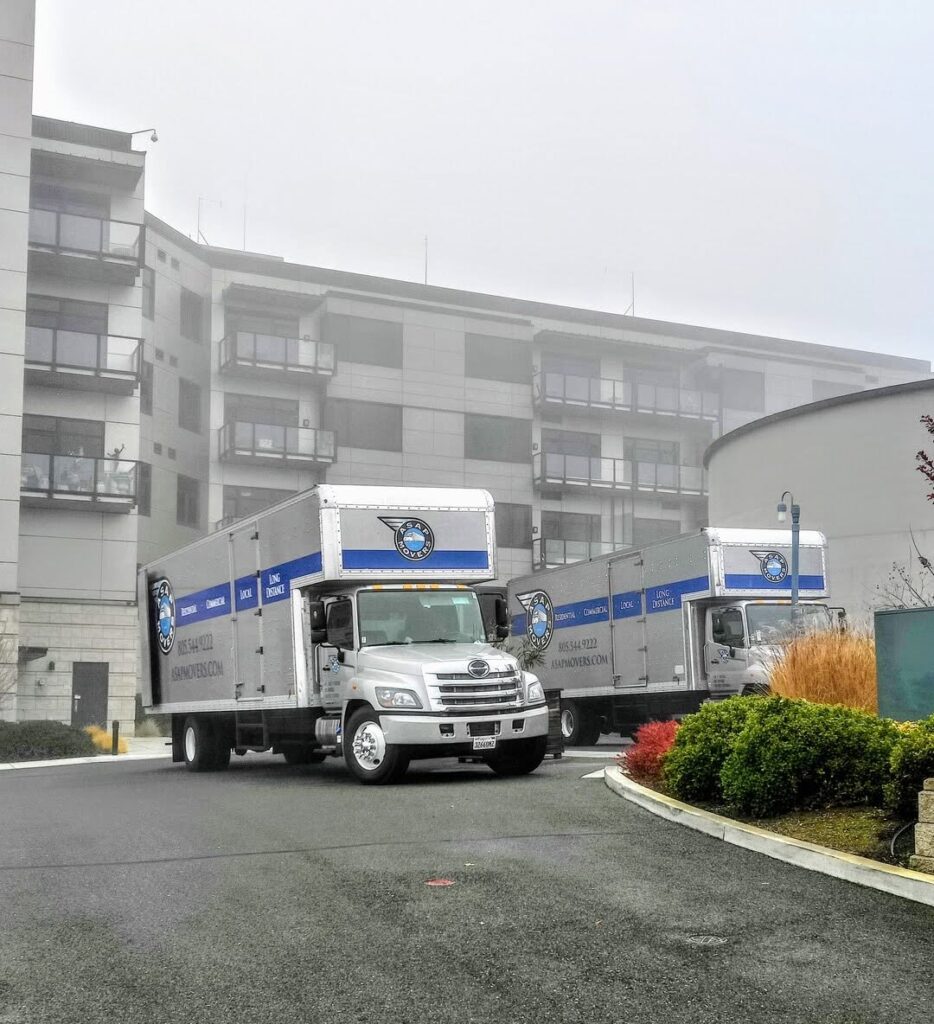
None of this is complicated, but it’s the difference between a crew that has done this through twenty Central Coast winters and one that has not.
What You Can Do the Day Before and the Morning Of
Most of what helps is preparation you can handle yourself in under an hour. The crew controls the truck and the wrap, and you control the approach to your door, which is where wet moves usually go wrong.
- Clear and sweep the walkway. Wet leaves on a path are more dangerous than the rain itself, and a slip with a dresser is how both people and furniture get hurt.
- Set out old towels inside both doors. Crews wipe their hands and the items, not their boots, since boots stay on the runners.
- Move the cars. The closer the truck parks, the shorter the exposure on every trip.
- Bag anything already in cardboard outside. Garage and shed boxes sitting on a concrete floor wick water from underneath before anyone picks them up.
- Keep one labeled box of towels accessible. You will want them at the other end.
Leave the garage door open if you have one. A covered area where the crew can wrap and stage items turns a difficult load into an ordinary one. Keep that towel box with the things you want on hand early, because it is where settling into a new house begins.
Watching the forecast for your Santa Maria move date? Give us a call at (805) 544-9222, and we’ll walk through the plan for a wet load before you commit to a date.
Which Items Need the Most Attention in Wet Weather
Cardboard is the weak link, not the furniture. A carton that gets damp at the bottom loses its stacking strength quietly. The failure shows up later, when it is lifted off a stack in the new garage.
Crews stage boxes off the ground and load them early while the truck floor is still dry. That one sequencing choice prevents most of the damage we see after a wet move. Solid wood and veneer both react to moisture, veneer reacts faster.
Those pieces get loaded with the padding fully closed rather than tucked. Electronics travel in their own cartons away from the door end of the truck. Mattresses and upholstery hold water instead of shedding it, which is why bagging them indoors matters.
When Rescheduling Is the Better Call
Steady rain is a working condition. A genuine storm with wind is a different judgment. That applies most to a long carry across open ground, an exterior staircase, or outdoor landings. Those are the jobs where an extra day costs less than a bad morning.
Raise it early rather than on the day. Closings, lease end dates, and facility move-in windows often cannot shift. Then the answer is to plan around the weather instead of moving the date. Your coordinator can tell you what your options are for your booking and what the knock-on effects would be.
What does not work is deciding at seven in the morning with a crew already on the road. By then the day is committed on both sides. Lead time gives you room to make that call, and it’s one of several reasons to book movers early.
Planning a Move Around the Wet Months
The drier window on the Central Coast runs roughly from April into November, and August is effectively dry. Moving inside that stretch removes the problem entirely, which is worth knowing if your dates are genuinely flexible. Most are not. The practical version is to book earlier for a winter move and keep the opening hour of the day loose.
Weekday mornings in winter give a crew more daylight. Daylight matters more than people expect once a load runs long. Load the boxes you packed for opening night last, so they come off the truck right away.
Have questions about your dates, or just want to talk through a wet weather plan first? Contact us, and we’ll help you figure out the right next step. You can also reach us at (805) 544-9222 or info@asapmovers.com. You’ll find us at 1310 W McCoy Ln, Santa Maria, CA 93455.
Related Topics: